
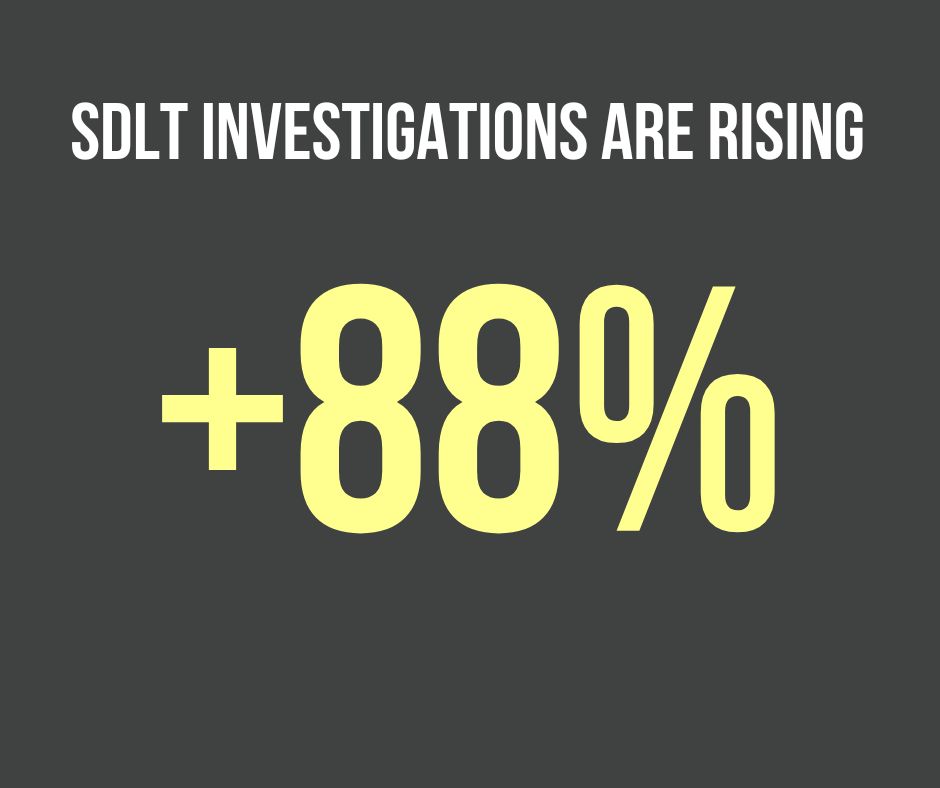
HMRC opened 3,035 SDLT investigations in the year to April 2025. That is up 88% on the previous year. They recovered £200 million in unpaid tax, at an average of £66,000 per case.
Those are not numbers from a specialist tax practice. They are numbers from conveyancing. From transactions that look, on the surface, like ordinary day-to-day work.
The question worth sitting with is a simple one: how many of those cases looked routine when the return was filed?
HMRC knows where to look
This is not random enforcement. HMRC has become significantly better at identifying transactions where the SDLT position is likely to be wrong, and it is targeting them accordingly.
The areas drawing the most scrutiny are familiar ones:
- Mixed use claims, where the residential rate should have applied
- Reliefs that have been applied too broadly or without adequate support
- “Uninhabitable” arguments that do not hold up on the facts
- Transactions that have been misclassified at the point of filing
These scenarios are not unusual. They come up regularly in conveyancing work. And they often involve a judgement call made quickly, under time pressure, without specialist input.
That is not a criticism. It is simply the reality of how conveyancing operates. But it is also exactly the gap that HMRC is now targeting at scale.
The exposure is bigger than the tax
When an investigation is opened, the liability is rarely just the underpaid tax. Interest accrues from the original transaction date. Penalties can be added depending on the nature of the error. And the time and cost involved in responding to an enquiry can be significant, even when the outcome is ultimately favourable.
There is also a reputational dimension. Clients who receive an HMRC enquiry linked to a transaction handled by your firm will want answers. That conversation is rarely straightforward, regardless of who was ultimately at fault.
The volume problem
Perhaps the most uncomfortable aspect of the current picture is this: at 3,035 investigations in a single year, HMRC is opening cases at a rate that means many firms will be affected. Not firms that have done something obviously wrong. Firms that handled a mixed use property, applied a relief in good faith, or made a classification call that HMRC sees differently.
The returns most at risk are not the ones that felt difficult at the time. They are the ones that felt routine.
What a different approach looks like
For most conveyancing teams, the honest answer is that SDLT calculations are handled as part of the transaction flow, not reviewed as standalone tax positions. That made sense when HMRC scrutiny was lower. It is harder to justify now.
The firms reducing their exposure are the ones that have separated the SDLT position from the conveyancing process, ensuring calculations are reviewed by specialists, that reliefs are properly substantiated, and that there is a clear audit trail behind every submission.
It is not about doing less work. It is about making sure the work that is done is defensible.
Concerned about your firm’s SDLT exposure?
We work with conveyancing teams to assess and resolve SDLT risk before it becomes an investigation book a no obligation meeting here.